I present to you the case of cyclist Andrew Woolley, which has been appearing on the various California bicycling listserves and other discussion forums.
Andrew Woolley was cycling west through congested traffic on El Cajon Boulevard in San Diego last March, splitting the lane to pass traffic because he was cycling faster than the speed of the other traffic. Numerous streets and business driveways intersect El Cajon where Woolley was riding, so splitting the lane seems reasonable to me.
Woolley passed San Diego motorcycle cop David Root, who was sitting on his bike in the traffic lane. Root flipped on his lights and told Woolley to pull over. According to Root’s testimony at traffic court, Woolley evidently is familiar with the California Vehicle Code and corrected Root on the wording of CVC 21202(a), which Root dismissed as “semantics.” Because Mr Woolley apparently got a little uppity with Officer Root in trying to educate him on traffic law, Officer Root responded with, “I was going to give you a warning, but now I’m giving you a ticket ’cause you can’t take a warning” and cited the cyclist for violating CVC 21202(a), which is the Far To The Right rule for cyclists in California.
Transcript of the case posted by Serge Issakov
here. Mentioned also at
Bike San Diego. H/T to Mark Sauerwald for bringing this to my attention.
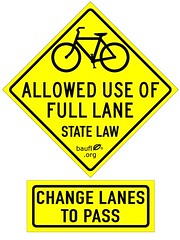
CVC 21202(a) says: “Any person operating a bicycle upon a roadway at a speed less than the normal speed of traffic moving in the same direction at that time shall ride as close as practicable to the right-hand curb or edge of the roadway….” I’m not a lawyer, but in my dumb untrained mind, the cyclist was riding at a speed greater than the normal speed of traffic, so the Far To The Right rule doesn’t apply, right?
Woolley argued this in court and, because the speed limit on El Cajon is 35 mph, the judge decided that was “the normal speed of traffic” and found Woolley guilty. Bah, humbug.