Posted In Uncategorized
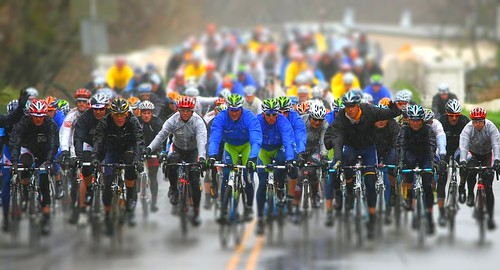
 March 31, 20098 Comments on Cycling in the rain
March 31, 200912 Comments on Save to Cloud
I’m participating in the internal beta for some of the services made possible with Sun’s recently announced Cloud Computing services. When I signed on I had to check a box indicating I understand that I’m not allowed to disclose any details of this beta, but since the CEO mentioned it at his blog I guess I can write something about it too.
(Aside: Jonathon writes his own blog posts. I asked. How many Fortune 500 CEOs do you know who can edit their own HTML?)
I think this is something like Sun’s third or fourth attempt at computing as a utility, and I think this time they got it right. The “Save to Cloud” feature in OpenOffice and StarOffice that Jonathan mentioned is tres cool, and it’s not too hard to envision things like an open source file system that stores your server files to the cloud (Oh wait, it’s already there with WebDAV and DavFS!). Later this year, you’ll be able to save your virtual machine to the cloud with the open source Virtual Box desktop virtualization software. Everything is built around an idea of a Virtual Datacenter (VDC) that you can use to allocate the storage and compute resources you need.
Amazon is the dominant player in the Cloud universe; if you’re familiar with the Amazon Web Services (AWS) API, you’ll find yourself in somewhat familiar territory with parsing XML output. What’s super nifty to me, though, is the RESTful HTTP with JSON and even a drag-and-drop Web GUI interface for your Virtual Datacenter. It’s very easy to get a nice little web application up and going in a short amount of time.
Amazon Web Services is very popular with web startups — these startups use a mature, scalable and reliable web infrastructure resources offered by Amazon so they focus on developing the technology and not pay out the nose for server costs. Twitter, for example, uses AWS.
The problem Twitter now has, though, is they’re tied completely to AWS. Amazon’s API is proprietary to Amazon, so Twitter cannot simply move to another cloud provider or even bring their web services in house without tremendous cost and effort to rewrite, test, and debug all of their software. With an open API, such as that provided by *ahem* Sun’s Cloud Services, transitioning is theoretically as easy as changing a few URIs in the software. We’re even talking about marketing Cloud Services appliances to make that switch even easier. Because the API is open, there’s nothing preventing IBM, Dell, or HP from doing the same thing if they want. (Oh wait: Sun’s Cloud can provide AWS compatability, I’m told.)
Disclosure: I hope this is obvious, but I work at Sun Microsystems. I’m not writing on behalf of the company in this post.
March 31, 20094 Comments on Tuesday Transit Quiz: Can I catch this bus?
I’m with my 9 year old daughter at the Border’s Books store on Pacific Avenue in downtown Santa Cruz (point “A” on the map below). My bus — the route 35 to Scotts Valley, leaves on the hour and half hour from the Santa Cruz Metro Center about 2 blocks and 1,000 feet away (point “B” on the map). All buses leave the Metro Center on time.
We’re walking out of the Border’s Books store at 12:28 PM. Will we catch the 12:30 bus? My daughter is not a fast walker. Look at the map and let me know if we should hurry, or should we take it easy and catch the 1 PM?
Hints: I ride the 35 frequently and know the route. Scotts Valley is north of Santa Cruz. Bus 35 exits the Metro Center at Pacific Avenue. Today’s quiz tests your knowledge of Google Maps transit features.
What do you think? I’ll post my answer later today.
March 31, 20094 Comments on My big thighs
I’ve never been a fast gainer and my legs are stick thin for a cyclist’s legs, but I’ve always noticed that as the days get longer and I spend more time on the bike, my jeans get very tight around the thighs. Today, for example, just walking around it feels like the stitches are gonna rip right out of my jeans they’re so tight.
These are not skinny sk8r jeans or something from Rock & Republic — my jeans are usually the cheap bargain basement store brand denims. I guess it’s time to wear my old man baggy chinos again.
Cozy Beehive had lots of big thigh cyclist photos in January.
Does that look like a stroller / bike hybrid below? The kiddo on the bike is Hugh Jackman’s daughter, Eva Eliot, in New York City.

Bicycles around the blogosphere
Shorty Fatz chopper bikes.
Another interesting wooden bicycle.
55-year-old Peijia Wu, from Shandong province, allegedly took three months to build his DIY wooden bike. It features no metal parts whatsoever – joints are fixed with small wooden bungs and a rod-crank system has replaced where the chain would normally be.
Okay, it’s a car, but still Gawker uses “stunning” to describe this Mercedes and I have to agree.
I realize I’m late to the party, but in case you haven’t heard Phil Keoghan of The Amazing Race is riding his bicycle from LA to New York to race money for MS research.
$2000 per ton for your carbon footprint?
I’m stunned! Alan is bent!
[Ad] Do I want to master mountain bike skills?
Product Recall: Better late than never, I suppose.
March 30, 2009Leave a Comment
Jon Winston finally uploaded his Sacramento Bike Blogger Meetup podcast, featuring some cool music, Paul Dorn and David Bernstein. I don’t sound too much like an idiot. For the record: Neither Paul or I drink.
That is all.
March 30, 200932 Comments on Accidents are, umm, no accidents
Tom Vanderbilt has been harping a lot lately on the use of the word “accident” to describe traffic collisions. He’s also commenting a lot, lately, on the use of passive voice in news reports about traffic collisions. For example, “Joe Blow was killed when a car crossed the center line and struck him head on.” There’s little indication that the inanimate car was controlled by a driver.
A local (to me) example is the reporting after Santa Clara County Sheriff Deputy James Council drove his car into cyclists Matt Peterson and Kristy Gough last year. KTVU describes the collision thusly: “A rookie Santa Clara County sheriff’s deputy whose patrol car swerved into a group of cyclists on a training ride, killing them….” The article happens to be on the deputy’s history of drunk driving, but there’s no indication in the lead sentence that the deputy was the one who actually driving his car — it was the patrol car that swerved into the cyclists.
The San Jose Mercury News did even worse when they maddengly printed, “The group collided with the deputy’s car” when describing the accident, although the cyclists were riding lawfully on their side of the rode and it was the deputy who drifted over the line into oncoming traffic.
The San Francisco Chronicle did a better job assigning agency to the driver of the vehicle: “ A rookie Santa Clara County deputy sheriff patrolling a winding Cupertino road Sunday morning veered into the opposite lane of traffic and struck three bicyclists, killing two.“
Vanderbilt asks questions one why journalists use the passive voice so much in their traffic reporting.
I am frankly not sure why we are so afraid to assign responsibility in car crashes. Is it that we view traffic violations in general as “folk crimes,” not quite “real” crimes? Is it the “there for the grace of God” argument, that it may someday be us behind the wheel of “a car that strikes a pedestrian”? I sometimes hear the argument made, ‘well that driver will suffer the rest of his life for what he did’; maybe they will, maybe they won’t. But that’s not provable, not quantifiable. Prison time is.
Tom asks some important questions in my opinion.