Federal Transit Agency seeks public comment on proposed policy change for pedestrian and bicycle access projects
Local governments can apply to several programs administered by the U.S. Federal Transit Agency (FTA) to improve pedestrian and cyclist access to transit centers. Under Federal law, any capital project to enhance pedestrian and bicycle access must have a “physical or functional relationship” to the transit center.
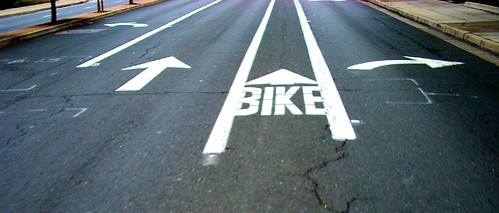
FTA guidelines for these types of programs are vague, but a standard of 1,500 feet is generally applied — any project more than 1,500 feet away from a transit stop or station is currently not eligible. For many large stations, that barely gets you into the parking lot. The FTA now acknowledges, however, that this 1,500 distance is too short. According to the FTA, research shows people are willing to travel about 15 minutes to their bus stop or station. That equates to about 1/2 mile for walking and three miles bicycling.
The FTA proposes to expand the radius they’ll consider for grant requests: pedestrian projects can be up to 1/2 mile away; bicycle projects can be up to three miles from the transit center to receive Federal Transit capital grants. That could potentially make almost every bike facilities project in the San Francisco Bay Area eligible for FTA grant funding.
The FTA proposed this change after Transportation Secretary Ray LaHood challenged the Department of Transportation to improve the livability of our nation’s communities. A livable community, according to LaHood, is “a community where if people don’t want an automobile, they don’t have to have one; a community where you can walk to work, your doctor’s appointment, pharmacy or grocery store. Or you could take light rail, a bus, or ride a bike.” According to Secretary LaHood, “livable communities are mixed-use neighborhoods with highly-connected streets promoting mobility for all users, whether they are children walking or biking to school or commuters riding transit or driving motor vehicles.
Benefits include improved traffic flow, shorter trip lengths, safer streets for pedestrians and cyclists, lower greenhouse gas emissions, reduced dependence on fossil fuels, increased trip-chaining, and independence for those who prefer not to or are unable to drive. In addition, investing in a ‘complete street’ concept stimulates private-sector economic activity by increasing the viability of street-level retail small businesses and professional services, creating housing opportunities and extending the usefulness of school and transit facilities.”
To view the entire proposal and submit your comment electronically, visit regulations.gov. If this link doesn’t take you directly to the proposal, search for “FTA-2009-0052.”
Props to Nate Baird.



 in which a mystery writer and homicide detective team up to solve the murder of the week.

 ” the police dismiss the crime as a vehicular hit and run and everybody assumes the driver will never be found. The diligence of the victim’s close friends, however, uncovers evidence of foul play!