Author: Richard Masoner

The ultimate bicycle model

From Physorg.com:

‘Bicycle manufacturers have never been able to say precisely how a bicycle works’, explains Dr Arend Schwab of the Faculty of Mechanical, Maritime and Materials Engineering (3mE). ‘They have always had to refine their designs purely through experimentation. In our model, they can enter into the computer all of the various factors that influence the stability and handling of their bicycle. The model then calculates how the bicycle will react at specific speeds.’ The model has recently been published in the science magazine Proceedings of the Royal Society, Series A.

Because the model has the ability to indicate whether a design will deliver a jittery bicycle, or indeed a stable one for seniors, the bicycle industry is highly interested in the findings.


Adidas

Read more. Via the always fascinating Velorution.

A Nice Morning Drive

As a teen growing up in the early 80s, I was a huge fan of the Canadian “math rock” band RUSH. Among my favorite songs: Red Barchetta , which takes place in a future world where the “motor law” prohibits driving older “unsafe” cars on public roads. In the song, the protagonist visits his uncle to drive his old Ferrari Red Barchetta sports car. “Alloy air cars” then give chase to run the Ferrari off of the road. The wonderfully evocative lyrics and music transported me to a future where freedom can still be found if you knew where to find it.
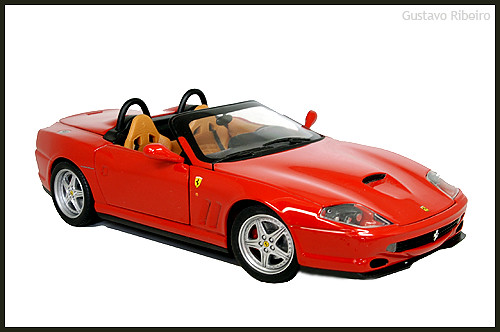
“Red Barchetta” was inspired by a short story in the November 1973 issue of Road & Track entitled “A Nice Morning Drive.” Author Richard Foster predicts a future where safety requirements for new cars results in huge “Modern Safety Vehicles” (MSV). Way back in 1973, Foster wrote, “Cars became larger, heavier, less efficient. They consumed gasoline so voraciously that the United States had had to become a major ally with the Arabian countries.”

“People became accustomed to cars which went undamaged in 100-mph collisions,” the story continues. “They gave even less thought than before to the possibility of being injured in a crash. As a result, they tended to worry less about clearances and rights-of-way, so that the accident rate went up a steady six percent every year. But the damages and injuries actually decreased, so the government was happy, the insurance industry was happy and most of the car owners were happy.”

In Foster’s world, some MSV drivers would purposely run older, smaller cars off of the roads simply because they could get away with it.

In our real-life 21st Century, cars have indeed become much safer, and in fact they are somewhat less likely to be in an accident because of safety improvements beyond just adding bulk to a vehicle. There has been one deleterious side effect, however: people drive faster and more dangerously so that the more vulnerable road users — pedestrians and bicyclists, for example — are now dying at a higher rate while overall road deaths have dropped. We’ve all heard that “the laws of physics” mandate that we keep our bikes off of the road, and that if we’re hit and killed it’s our own fault.

I’m amazed at Foster’s anticipation of the psychology of “mass rules” 35 years ago, but these things ought not so to be. ABS, traction control, stability control, rollover protection, adaptive cruise control, airbags, crumple zones and all the other advanced safety features of modern automobiles are great to have, but often these things only enable motorists to behave even more like boneheads when they’re behind the wheel. And of course, when I say “bonehead” I include myself in that category, because better control almost naturally leads to faster driving.

Cycling still has about the same relative risk of serious injury or death as driving, but the risk seems to be trending upward for some areas. A real solution is to increase the number of bicyclists so that all road users expect to see us on the road and adjust their driving accordingly. I’m not convinced that tougher or new laws (such as the fad for 3-foot passing laws) is entirely the answer, though enforcement of existing laws would be a tremendous help. I’m also a fan of road diets and traffic calming, though these measures are generally appropriate for slow traffic areas such as residential neighborhoods.

I’m not clever enough to come up with the solution to this safer vehicle paradox. What are your ideas? What have you seen in the media or blogosphere on how to mitigate risk compensation?

Cyclist shoots motorist

Milwaukee bicyclist shoots motorist after near collision

A bicyclist shot a motorist after the man’s car nearly hit the bike on Friday night, police said.

The 28-year-old driver of the car stopped to check on the bicyclist, who had fallen to the pavement around 10:45 p.m., police said.

The bicyclist got up, fired three shots and hit the driver once in the shoulder, police said.

The motorist drove to the house of a friend, who then took him to a hospital. He was treated and released.

Police said they were looking for the bicyclist on Saturday. No other details were released.

This real-life Spike Bike was mentioned in the Milwaukee Star Tribune. Reported also at WKBT and FOX 6.

How Wars Are Won: Book review

Because a good portion of my commute is by bus, I read many books. I try picking books on topics in which I have little interest in the hope of learning something new and interesting.

A while ago I though I’d learn something about military history, so I randomly chose A History of Warfare by military historian John Keegan. History was written by Keegan to debunk Carl von Clausewitz‘s famous theory that “war is merely a continuation of politics.” I’m sure that’s fascinating, but the book assumes in-depth knowledge of Clausewitz’s writings, which I don’t have.

Later, I tried again with a different book: Bevin Alexander’s How Wars Are Won: The 13 Rules of War from Ancient Greece to the War on Terror, which is much more accessible. It helps to know something about European and Asian history, but Alexander covers each of the “13 rules of war” in separate chapters by describing the rule and giving examples from history where the rule was used effectively and other examples where the rule failed and why. The author then completes each chapter with discussion on how the rule can be applied in modern warfare and in the current “war on terror.”
I couldn’t help notice that each chapter is formulaic. After the opening paragraphs describing the rule, there’s a historical example that begins with “[ Alexander the Great | Napoleon | Hannibal | Rommel | Genghis Khan | Stonewall Jackson | Mao ] applied this rule in one of the most brilliant battles recorded in history.” In the following section, Alexander then describes a battle that was lost because the rule was not used, or because it was not applied or executed correctly. “This rule would have guaranteed victory, and it’s inconceivable why [ Grant | Hitler | Lee | Napoleon ] failed to apply this rule to the battle, which resulted in major strategic losses that affected the outcome of the entire war.” Finally, the closing paragraph applies the rule to the U.S. war against the Taliban in Afghanistan, obviously to make this book “relevant” and make it more marketable (the book was published in 2002). Invariably, this final paragraph includes the sentence, “This rule of war was how the Taliban in Afghanistan were destroyed by American special forces in the fall of 2001.”

In spite of the formula and obvious last-minute additions on 9/11 and Afghanistan, How Wars is a very readable and interesting book. Alexander’s writing as an armchair general gets a little annoying at times — he often states his incomprehension of why battlefield commanders fail to comprehend the battlefield environment, and hence losing the battle. Anybody who has had to make quick decisions in a stressful situation, however, understands the “fog of war” and the tunnel vision that occurs.

What are the 13 rules of war?

  1. Striking at enemy weakness.
  2. Defend, then attack.
  3. Holding one place, striking another.
  4. Feigned retreat.
  5. The central position.
  6. Employing a superior weapon.
  7. Driving a stake in the enemy’s heart.
  8. Blocking the enemy’s retreat.
  9. Landing an overwhelming blow.
  10. Stroke at a weak spot.
  11. Caldron battles.
  12. Uproar east, attack west.
  13. Maneuvers on the rear.

Interbike 2007 preview

Click here for Interbike 2007 Coverage

Interbike 2007 Expo begins next Wednesday and I’ll be there to report on product news, trends, and photos on behalf of CommuteByBike. I’ll drool over the high dollar race-worthy gear, clothing and training aids, of course, but I’ll take a close look at:

  • Family cycling accessories like the iBert child seat.
  • Utilitarian cycling wear.
    Huffy Sonic: SPEEDOMETER and SHIFTER!
  • Performance cycling wear such as the new Argento shorts with reflective panels from Black Bottom Cyclewear.
  • Bags from the myriad bag companies there, like newcomer Rickshaw Bags of San Francisco.
  • The carbon belt drive used on Spot Bikes.
  • Coffee with the one and only Bobke at the Kryptonite Booth.
  • The latest lights from vendors like Light and Motion and others.
  • The Best Barista contest at the Louis Garneau booth on Thursday, not to mention the free coffee given away during the opening hour of the expo.
  • Superstars like Saul Raisin, Phil Ligget, Stuart O’Grady and Niki Gudex.
  • The outlook for independent bike dealers.
  • Custom frame builders.
  • New bikes — especially “urban” or utility bikes — from the more mainstream bike companies such as Specialized, Raleigh, Masi, and the QBP brands Surly and Civia.

Trek will not be at the Interbike Expo. Specialized employees, including company president Mike Sinyard, are riding their bikes the 600 miles from San Jose to Vegas.

Be sure to watch for a special VIDEO edition of The Spokesman Cycling Podcast in which I will appear with other cycling bloggers and the usual Spokesman gang of Tim, Dave, Carlton, and Tim. I was hoping to meet Elden the Fat Cyclist, but he can’t make it. My sources do tell me that I might be able to unveil the identity of BSNYC, though, which would be a treat.

Interbike news.