Category: advocacy

#ReplaceBikeWithCar Portola Valley California

Portola Valley, California is a wealthy town nestled in the hills of the Santa Cruz Mountains south of San Francisco. With an average median income of $244,000 per year, it’s the sixth wealthiest community in California with the ninth most expensive housing in the nation.


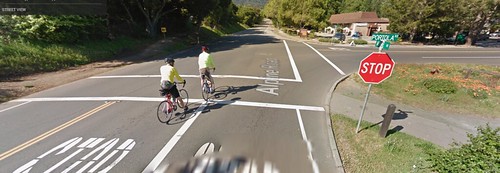
Alpine @ Portola, Portola Valley, CA

It’s also a great place to ride. Residents of Portola Valley and nearby Woodside perpetually complain about the weekend traffic jams as hundreds of road cyclists pass through their towns. When the wealthy residents of this area (including the CEO of my employer, who also happens to be the fifth-richest individual in the world) ask San Mateo County Sheriff Greg Munks to intervene, the sheriff listens.

(more…)

Avid cyclist to newbies: It’s your fault we can’t have nice things

Clarification: I’m told Volkswagen’s financial sponsorship of People For Bikes (and, correspondingly, their influence) is fairly small. I don’t philosophically have difficulty with an auto manufacturer spending their marketing dollars on bike projects, but I do believe it’s important to be aware of where those dollars are coming from. People for Bikes is a bicycle industry trade group. I think they and their PFB Foundation do good work but, again, it’s important for us to know where the money comes from and where it goes.

Self-identified “cycling evangelist” Richard Fries, who works as Development Adviser for the auto-industry funded People for Bikes advocacy group and clearly writes from a position of privilege, suggests cyclists can win political support by reducing our impact on the roads we share with other vehicles.


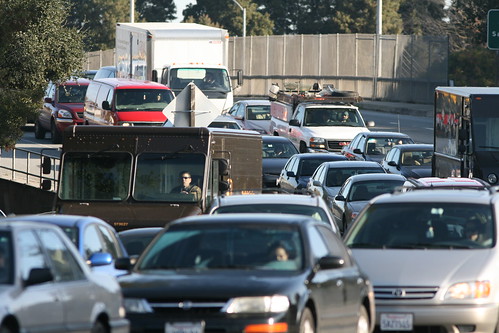
Willow Road morning traffic
 

(more…)

A U.S. history of jaywalking

I’ve mentioned several times that jaywalking is a relatively new term in the American English lexicon and the result deliberate and concerted effort by the motor and oil industries to criminalize what was once considered a perfectly civilized practice: using the public street as a public thoroughfare available for all users.


BBC U.S. correspondent Aiden Lewis covers the U.S. history of jaywalking. American jaywalking laws sometimes baffle British visitors, because they live in a place where crossing the road is not a crime.

The idea of being fined for crossing the road at the wrong place can bemuse foreign visitors to the US, where the origins of so-called jaywalking lie in a propaganda campaign by the motor industry in the 1920s.

A key moment was a petition signed by 42,000 people in Cincinnati in 1923 to limit the speed of cars mechanically to 25mph. Though the petition failed, an alarmed auto industry scrambled to shift the blame for pedestrian casualties from drivers to walkers.

Local car firms got boy scouts to hand out cards to pedestrians explaining jaywalking. “These kids would be posted on sidewalks and when they saw someone starting to jaywalk they’d hand them one of these cards,” says[ history professor Peter] Norton. “It would tell them that it was dangerous and old fashioned and that it’s a new era and we can’t cross streets that way.”

There’s lots of good background in that article at BBC News Magazine: Jaywalking: How the car industry outlawed crossing the road. Keep this in mind the next time somebody blames the victim in a pedestrian hit-and-run.