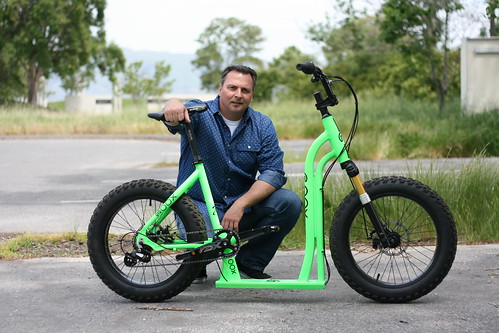
Check out the “Moox” bike — a crazy scooter + bike combo shown below with its inventor, Mike Silvestri.
Posted In Bicycle Brands
 April 14, 20161 Comment on How low can you go? Scooter + bike = ultra low step through
Check out the “Moox” bike — a crazy scooter + bike combo shown below with its inventor, Mike Silvestri.
April 13, 20162 Comments on NIMBYs in Santa Cruz
TL;DR summary: Despite claims to the contrary, the Santa Cruz Corridor Plan decreases automotive traffic impacts from development, helps improve tax revenue for infrastructure work, and indirectly discourages dispersed development in other, less regulated areas of Santa Cruz County outside of the city of Santa Cruz.
Over the past several months I’ve become acquainted with a planner who, until very recently, worked for one of the large Bay Area planning firms. Sitting next to her on the bus is like attending a graduate class on planning. I learned, for example, that the profession of urban planning emerged during the Victoria Era to mitigate the consequences of the Industrial Age by providing a healthier place for factory workers to live. They created a Utopian concept of “Garden Cities” to move workers away from filthy, polluted tenement housing. Our modern American ideal of a suburban detached home with a yard began as a social experiment by radical liberal idealists like Ebenezer Howard, who created the diagram below illustrating a “Central City” and surrounding Garden Cities all interconnected by railroads and canals.

April 13, 2016Leave a Comment
The Sea Otter Classic 2016 outside of Monterey, CA begins tomorrow. The weather may be a little unsettled and on the cool side, so I made a map of the coffee spots with booth numbers I know about at the festival grounds for your benefit. At least one of these vendors will even give free samples. The Food Court no doubt has coffee too. There’s also usually a candy coffee drink vendor right outside of the entry gate at the ticket sales area.
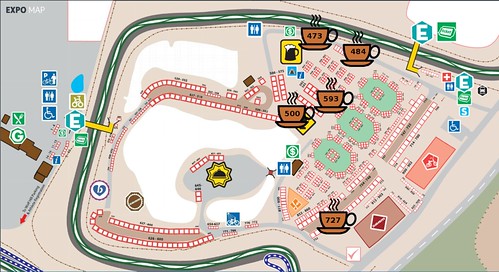
Coffee companies at Sea Otter this year include 10 Speed Coffee of Calabasas, CA; Central Coast Espresso of Seaside; Don Francisco’s Coffee of Vernon, CA in LA County; and the Monterey Peet’s Coffee.
Yeah, I know about the two Starbucks drive thrus on Del Rey Canyon, but you’re in California, so you might as well drink coffee roasted here in California.
Watch this space along with my other social media accounts at Twitter, Instagram and Flickr (remember them?) for updates from Sea Otter this weekend.
April 12, 20161 Comment on Radio Re-run: Freakonomics on Traffic Safety
KQED Public Radio in San Francisco replayed the May 1, 2014 edition of Freakonomics Radio, titled “The Perfect Crime.”
The show begins with a discussion of homicide by car. You’ve heard or seen this claim before both here and elsewhere: If you want to kill somebody and get away with it, run them over with a car.
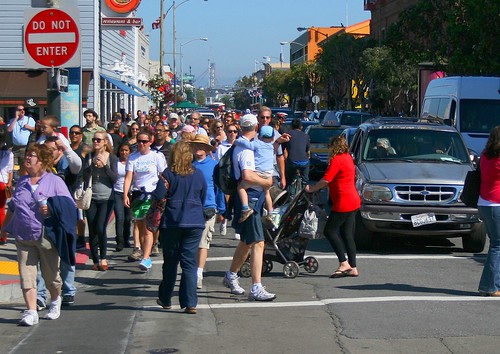
This is a lead in, however, to the issue of pedestrian fatalities both in New York City and nationwide. The show moves the focus to the issues traffic safety experts have beaten the drum on for a few decades. From the transcript of the show:
DUBNER: Okay, so that is a massive improvement, to be sure. How did this happen? How did pedestrian deaths fall so much?
NOLAND: The policy that we followed on trying to save pedestrians is to stick them in cars, so they are no longer pedestrians. And that will reduce your pedestrian fatalities ‘cause you don’t have as many anymore.
DUBNER: Robert Noland is director of the Voorhees Transportation Center at Rutgers. He says that as the automobile rose to exalted status in America, the roads – and the entire landscape really – were built to privilege them, the cars. This is most pronounced in the parts of the country with high pedestrian and bicyclist deaths, like the Southeast.
NOLAND: They focus very much on traffic flow and making the roads wider, straighter, and faster. With the assumption that that’s safer. And what a lot of the guidelines do is they look at freeways, which are very safe, and they’re safe because it’s controlled access. You don’t have any intersections. And they take those sorts of design guidelines and they apply it to a city, to city streets or suburban streets and create these very large arterial roads, which tend to be the most dangerous roads whether for drivers or for pedestrians.
I’ve summarized some highlights of the show below, but the show itself is a good introduction to the traffic safety topics I like to focus on. Invest a half hour listening online, or you can read the transcript here.
The show is about pedestrian safety on public roads, but many of the same issues apply to those who ride bicycles.
April 11, 2016Leave a Comment
The Silicon Valley Bicycle Coalition has opened the Virtual Bike Route Scout service to the general public. Virtual Route Scouts are volunteers who provide personalized routing advice for those who need bike-friendly directions within Santa Clara and San Mateo Counties in the San Francisco Bay region of California.
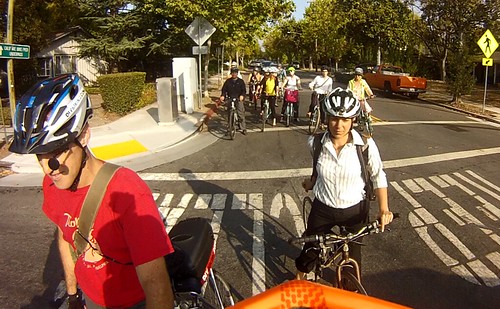
More at Silicon Valley Bicycle Coalition: Virtual Route Scouts.
April 6, 20165 Comments on I haven’t talked about carnage in a while
After a posting to Nextdoor from the Santa Clara Valley Transportation Authority (VTA) announcing a community workshop for the county bike plan update, a couple of people left typical hater comments in response.
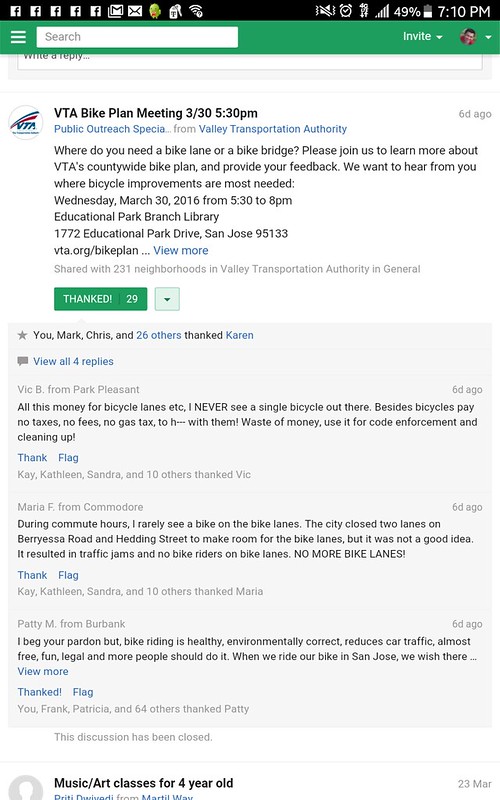
I know this isn’t exactly news, but it’s nice to see these two comments received a total of 20 “Thanks” (and from the same 10 people, no less), compared to 64 “Thanks” on the positive comment. On Nextdoor, these are the equivalent of Likes, Faves, or Pluses on other social media platforms.
Not mentioned in the hater comments are the usual bugaboo of scofflaw cyclists, but I’ve seen these following other recent stories involving bicycles. I haven’t mentioned the carnage caused by cars in a long time, but people tend to forget so it’s time for a revisit.